Overview
PHCD116
Ned Rorem
War Scenes
Five Songs to Poems of Walt Whitman
Four Dialogues
Donald Gramm, bass-baritone War Scenes
Eugene Istomin, piano Five Songs to Poems of Walt Whitman
Anita Darian, soprano and John Stewart, tenor
Four Dialogues (For Two Voices and Two Pianos)
Richard Cumming, piano
Ned Rorem, piano
| 1 |
War Scenes: A Night Battle |
|
|
04:18
|
| 2 |
War Scenes: A Specimen Case |
|
|
02:21
|
| 3 |
War Scenes: An Incident |
|
|
01:41
|
| 4 |
War Scenes: Inauguration Ball |
|
|
01:33
|
| 5 |
War Scenes: The Real War Will Never Get In The Books |
|
|
02:25
|
| 6 |
Five Songs To Poems of Walt Whitman: As Adam, Early in the Morning |
|
|
01:17
|
| 7 |
Five Songs To Poems of Walt Whitman: O You Whom I Often and Silently Come |
|
|
00:25
|
| 8 |
Five Songs To Poems of Walt Whitman: To You |
|
|
00:35
|
| 9 |
Five Songs To Poems of Walt Whitman: Look Down, Fair Moon |
|
|
02:07
|
| 10 |
Five Songs To Poems of Walt Whitman: Gliding O’er All |
|
|
00:46
|
| 11 |
Four Dialogues For Two Voices And Two Pianos: The Subway |
|
|
03:15
|
| 12 |
Four Dialogues For Two Voices And Two Pianos: The Airport |
|
|
04:11
|
| 13 |
Four Dialogues For Two Voices And Two Pianos: The Apartment |
|
|
05:23
|
| 14 |
Four Dialogues For Two Voices And Two Pianos: In New York and Spain |
|
|
05:22
|
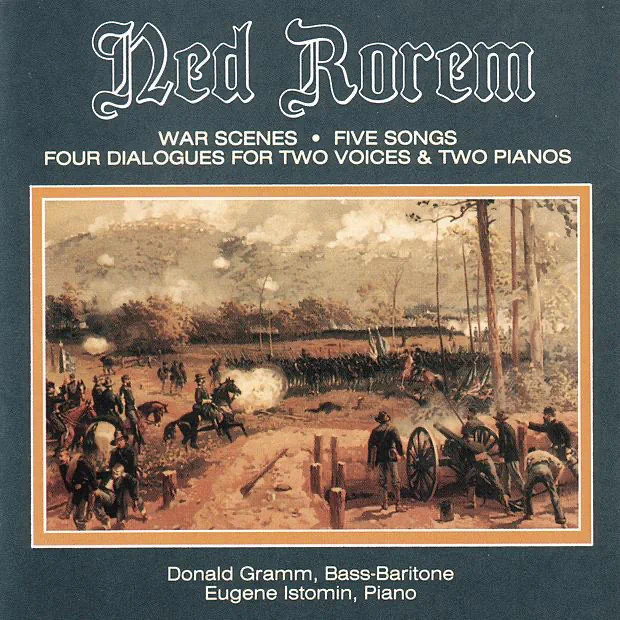
Ned Rorem’s vocal music stands at the center of American art song, blending clarity of text setting with emotional directness and refined musical craftsmanship. This Phoenix USA release brings together three major cycles: War Scenes, a stark and deeply personal response to wartime texts; Five Songs, showcasing Rorem’s lyrical gift; and Four Dialogues, written for two voices and two pianos, exploring intimate emotional exchanges with dramatic immediacy. Featuring Donald Gramm, John Stewart, Anita Darian, Eugene Istomin, and Richard Cumming, PHCD 116 offers authoritative performances of some of Rorem’s most compelling vocal works.
The texts for the cycle, WAR SCENES, were very freely excised from Walt Whitman’s diary of the Civil War titled “Specimen Days.” The music was designed for Gerard Souzay who first performed it, with pianist Dalton Baldwin, in Constitution Hall, Washington, D.C., October 19, 1969. The published score contains the following dedication: “To those who died in Vietnam, both sides, during the composition: 20-30 June 1969.”
The “Five Songs to Poems by Walt Whitman” were all composed in the summer of 1957 in Hyeres, France. they were commissioned by Walder Luke Burnap who premiered them, self-accompanied at the viginals, in New York the following spring.
The late Frank O’Hara conceived the words to “The Quarrel Sonata” (as he first called the FOUR DIALOGUES) expressly to be set by me for the unique combination of two voices and two pianos. This was accomplished early in 1954, mostly in London and Paris. The premiere took place on March 23rd of the following year at a private concert in the Contessa Pecci Blunt’s Roman palazzo. This lavishly somnolent old-world decor seemed gorgeously anachronistic to our glib non-poetry and vulgar music which, in their comic-strip tightness, pre-dated Pop Art by a decade.
- Donald Gramm — bass‑baritone
- John Stewart — tenor
- Anita Darian — soprano
- Eugene Istomin — piano
- Richard Cumming — piano
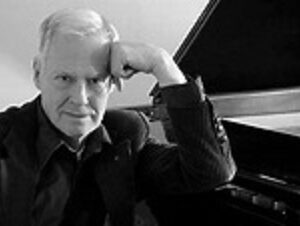
- Ned Rorem — composer